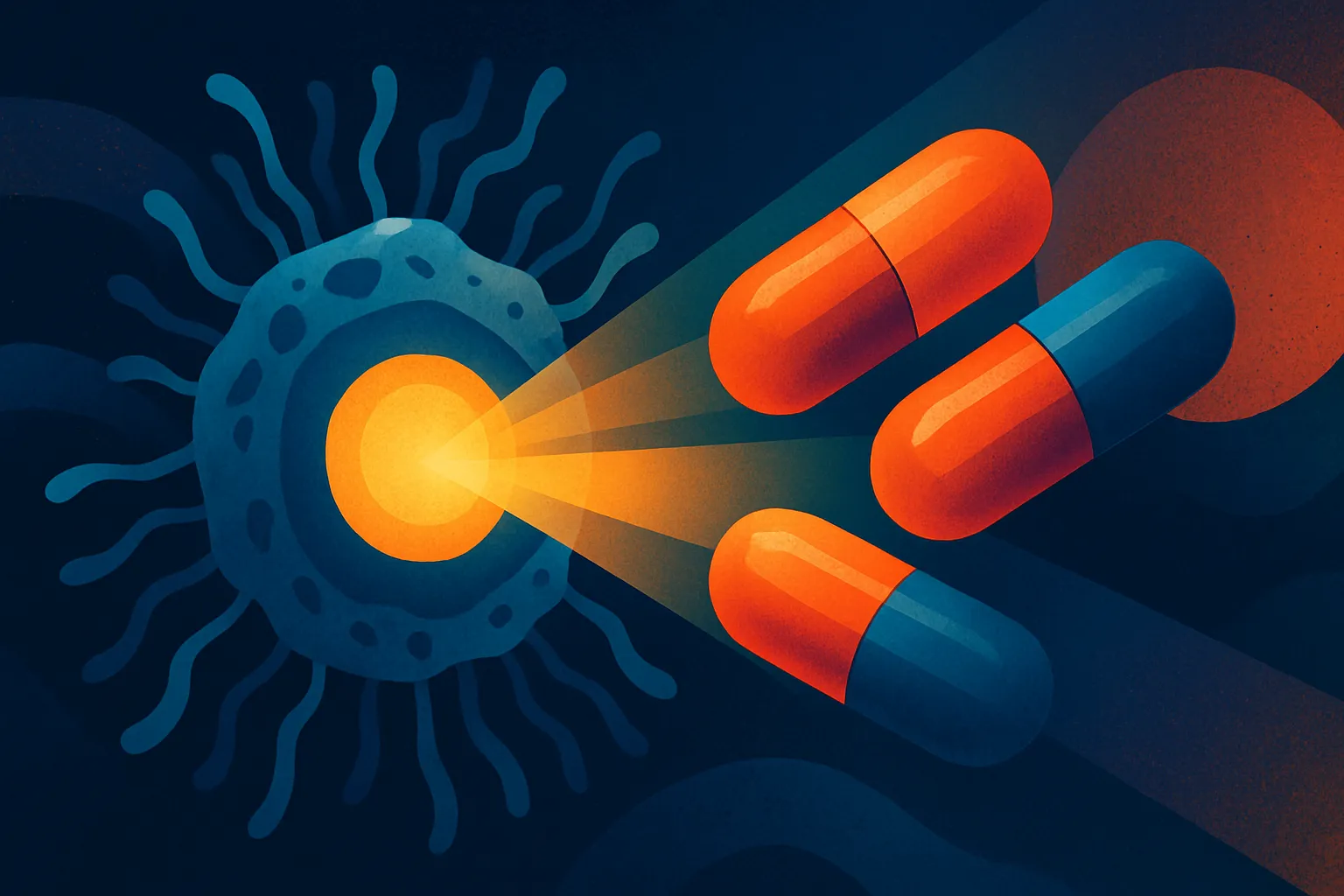
AI-Designed Antibodies: Leading the Race for the First AI-Created Drug
Discover how AI-designed antibodies are set to revolutionize medicine, with clinical trials on the horizon for these groundbreaking disease-fighting proteins.
Explore advancements in health tech, medical research, and the innovations enhancing global healthcare.
Discover how AI-designed antibodies are set to revolutionize medicine, with clinical trials on the horizon for these groundbreaking disease-fighting proteins.
Discover a novel Janus hydrogel with dual gradients, overcoming fabrication and bonding challenges for next-gen bioelectronic interfaces in electroceutical applications.
Researchers discover PVP-057, a scalable small molecule TLR3 agonist, offering robust and durable immune enhancement for next-generation vaccines.
Explore how increased LDHA activity enhances uPAR expression in M-MDSCs, contributing to immune suppression in pancreatic ductal adenocarcinoma.
Recent scientific advances are revitalizing antibiotic research, offering renewed hope in the global battle against drug-resistant superbugs after decades of stagnation.
A groundbreaking dental gel harnesses your saliva to rebuild enamel and heal cavities, potentially eliminating the need for traditional fillings.
A groundbreaking wireless brain implant, tinier than a grain of salt, uses light to monitor and transmit brain signals, operating for a year in mice with minimal tissue scarring.
Scientists discover a neural biomarker linked to compulsive food cravings, revealing how weight-loss drugs like Mounjaro effectively suppress appetite signals in the brain.
Researchers are investigating groundbreaking therapies to extend human lifespan and enhance healthy aging, with some experts predicting we may soon reach 150 years.
AI-powered tools are bridging the radiologist gap, enabling rapid tuberculosis diagnosis in underserved regions and transforming global healthcare.
A groundbreaking non-invasive AI interprets brain activity, converting thoughts and mental images into readable text, offering new insights into how our brains process the world.
Researchers harness LED technology and nanomaterials to develop a precise cancer treatment that destroys tumors with heat, leaving healthy tissue unharmed.
Stanford-led research uncovers that gas-powered home appliances can release dangerous benzene levels, surpassing those from secondhand smoke and raising cancer risks.
Discover how cutting-edge nanobot technology is transforming cancer diagnosis and treatment, paving the way for more precise and effective therapies.
Researchers have identified and removed a sugary barrier that allows bowel cancer to evade immune detection, paving the way for new immunotherapy treatments.