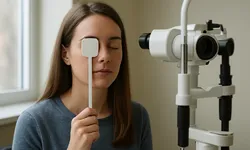
Amblyopia-often called "lazy eye"-is one of those conditions that sounds simple until you look closely at what's happening in the brain. The eye itself may be structurally fine, yet vision remains impaired because neural circuits learned the wrong balance early in life and then stopped adapting.
Now, researchers at MIT have reported a striking result: temporarily shutting down activity in one eye for about 48 hours can "reset" aspects of the visual system, allowing the brain to relearn how to see through that eye. The work, highlighted in a recent Popular Mechanics write-up, points to a different kind of treatment philosophy-less about forcing the weak eye to work harder, and more about reopening the brain's capacity to change.
The idea reads like a tech metaphor-power cycle the system and regain function-but the biology underneath is specific, and it carries implications for how scientists think about adult neuroplasticity, sensory rehabilitation, and the future of non-surgical vision therapies.
Why amblyopia is hard to treat after childhood
Amblyopia typically develops when the brain receives mismatched input from the two eyes during early development. That mismatch can come from strabismus (misalignment), unequal refractive error, or anything that causes one eye to deliver a blurrier or less reliable signal. Over time, the brain suppresses the weaker input to avoid confusion, and the neural representation of that eye's information becomes underdeveloped.
Clinically, the standard approach is to push the brain to use the weaker eye-often by patching the stronger eye, or by blurring it with drops-during a period when the visual cortex is still highly plastic. That "critical period" is when the brain is most willing to rewire based on experience.
The challenge is that the critical period closes. After that, patching tends to be far less effective. Adults can still learn, but the visual system becomes more stable, and the brain's built-in mechanisms for change are dialed down. That's why a method that appears to reopen plasticity, even temporarily, draws attention.
The MIT approach: silence the retina, then let the brain relearn
The MIT researchers' key move was not to "train" the weak eye directly at first, but to temporarily shut down retinal activity in one eye. In the study, this was done in a controlled experimental setting rather than through consumer-facing techniques. The shutdown lasted roughly 48 hours, after which normal activity returned.
That short-term deprivation is different from classic patching. Patching blocks patterned vision, but the retina and downstream pathways remain active. Here, the goal was to reduce the eye's output more fundamentally-essentially quieting the signal so the brain experiences a different kind of interruption.
After the shutdown ended, the researchers observed improvements consistent with the brain re-engaging learning mechanisms that are usually strongest earlier in life. In other words, the system behaved less like a locked-in adult circuit and more like one that could recalibrate.
What "rebooting" means in neuroscience terms
The "reboot" framing is catchy, but the underlying concept is a well-studied one: plasticity is regulated. The brain doesn't just learn; it also actively prevents excessive rewiring that could destabilize perception. In sensory systems, stability matters. You want the world to look consistent from day to day.
One way the brain balances stability and flexibility is through inhibitory signaling-neurons and circuits that act as brakes on change. During early development, those brakes are lighter, and experience can strongly reshape neural connections. As the system matures, inhibitory tone increases and plasticity becomes harder to trigger.
A temporary shutdown of input can disrupt that balance. When the brain senses a sustained drop in activity, it may compensate by increasing the gain on remaining signals or by adjusting synaptic strengths to maintain overall activity levels. This is sometimes discussed under the umbrella of homeostatic plasticity: the brain's tendency to keep neural activity within a functional range.
If the MIT team's results translate, the "reboot" is less like clearing a cache and more like nudging the brain into a state where it is willing to renegotiate how it weights signals from each eye.
How this differs from patching and other amblyopia therapies
Traditional amblyopia therapy leans on competition: block the strong eye so the weak eye has to carry the load. That can work well in children, but it's often slow and compliance-heavy. It also doesn't always address binocular vision-the ability to combine both eyes' inputs into a single percept with depth.
A shutdown-based approach is conceptually different. Instead of forcing the weak eye to work while the strong eye is blocked, it aims to change the brain's readiness to learn. That could matter because amblyopia is not just an "eye problem." It's a cortical wiring problem shaped by early experience.
The study also raises a practical question: if plasticity can be reopened, what kind of training should follow? A reboot alone may not be the whole therapy. The most likely path, if this ever becomes a clinical tool, would combine a plasticity-opening intervention with targeted visual tasks designed to rebuild acuity and binocular coordination.
The technical hurdles: translating a lab shutdown into a human treatment
The headline-friendly version-"turn your eye off for 48 hours"-glosses over the hardest part: how to do that safely, reversibly, and precisely in people. In animal research, retinal activity can be suppressed using methods that are not automatically suitable for routine clinical use.
Any human translation would need to answer several questions:
- Mechanism and specificity: What exactly needs to be suppressed-retinal firing broadly, specific pathways, or certain patterns of activity?
- Safety: How do you ensure the intervention doesn't damage retinal tissue, optic nerve function, or downstream processing?
- Reversibility: The shutdown must reliably wear off, returning the eye to baseline function without lingering side effects.
- Patient selection: Amblyopia has multiple causes and severities. A one-size-fits-all protocol is unlikely.
- Follow-up training: If plasticity is reopened, what rehabilitation regimen best converts that window into lasting improvement?
There's also the question of measurement. Vision isn't a single number. Clinicians would want to track acuity, contrast sensitivity, binocular fusion, and depth perception, along with real-world outcomes like reading comfort and fatigue.
None of that diminishes the result. It just clarifies why a compelling lab finding can take time to become a practical therapy.
What this suggests about adult neuroplasticity
Amblyopia research has become a proving ground for a broader neuroscience debate: how "fixed" is the adult brain? The visual cortex is one of the most studied parts of the brain, and it has long been used to define critical periods-those early windows when experience has outsized impact.
If a brief intervention can reopen plasticity in a mature visual system, it supports a view that the adult brain retains latent capacity for change, but that capacity is gated. The gates can be biochemical, circuit-level, or both.
That framing matters beyond vision. Similar questions show up in stroke rehabilitation, tinnitus, chronic pain, and even some psychiatric conditions where maladaptive neural patterns become entrenched. A technique that reliably and safely "unlocks" learning could influence how multiple fields think about recovery.
Industry implications: from ophthalmology to neurotech
If the underlying principle holds up, it could reshape parts of the vision-care market. Today, amblyopia treatment is dominated by pediatric protocols and behavioral compliance tools. Adult amblyopia is often treated as a harder problem with fewer options.
A plasticity-opening intervention would create room for new combinations:
- Therapy plus training: A short clinical procedure paired with software-guided visual exercises, potentially delivered at home.
- Diagnostics and personalization: Tools that identify which patients are likely to respond, and which visual functions need rebuilding.
- Regulatory and reimbursement questions: A therapy that blends a medical intervention with digital rehabilitation would need clear clinical endpoints.
It also intersects with neurotechnology trends. Companies working on noninvasive stimulation, sensory training platforms, and brain-computer interfaces are all, in different ways, trying to modulate plasticity. Vision is an attractive target because outcomes can be measured relatively directly.
At the same time, the field has seen plenty of ambitious claims around "brain training." Any future product inspired by this research would need rigorous clinical validation to avoid being lumped in with less credible offerings.
What to watch next
The MIT findings, as described, are a research step, not a ready-made treatment. The next phase for work like this typically involves replication, deeper mapping of the mechanism, and exploration of safer or more practical ways to induce the same plasticity shift.
For readers tempted to interpret the idea literally, it's also a reminder: deliberately depriving an eye of function is not a DIY experiment. The promise here lies in controlled, reversible modulation of neural activity, not improvised attempts to mimic it.
Still, the core message is hard to ignore. If a mature visual system can be coaxed into learning again with a short, targeted intervention, amblyopia may look less like a permanent limitation and more like a condition with a wider therapeutic window than previously assumed.


