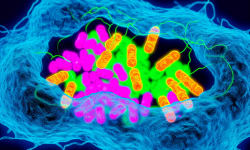
Roßmann and colleagues introduce a groundbreaking, one-step protocol for synthesizing a diverse range of impermeable fluorescent HaloTag substrates. This innovative approach allows researchers to efficiently label cell surface proteins with high specificity and minimal background, even at low ligand concentrations and with short incubation periods.
By employing these newly developed HaloTag ligands, the team successfully visualized neuromodulatory receptors and other cell surface proteins in live-cell environments. The impermeable nature of these probes ensures exclusive labeling of extracellular targets, making them ideal for in situ applications and super-resolution imaging techniques such as STED and PALM.
The protocol's simplicity and versatility represent a significant advancement for cell biology, neuroscience, and molecular imaging. It paves the way for more precise studies of protein dynamics, receptor trafficking, and cell signaling in real time, without the interference of intracellular background labeling.
This work builds on previous efforts, such as Bosch et al.'s evaluation of fluorophores for SNAP-tagged proteins, by offering a robust solution tailored for HaloTag technology. The new ligands are compatible with multicolor imaging and single-molecule tracking, expanding the toolkit available for cutting-edge live-cell microscopy.
For detailed experimental procedures, ligand structures, and imaging results, refer to the supplementary materials and the original publication.
Read the source »