Lithium has become a keystone material for electrification. It sits at the center of today's dominant rechargeable battery chemistries, and it is now a limiting ingredient for everything from mass-market electric vehicles to grid-scale storage that helps balance wind and solar power.
Yet the way lithium is commonly produced still clashes with the "clean energy" story. Traditional extraction from brines can take a long time and can be resource-intensive, while hard-rock mining brings its own environmental footprint. A new technique from researchers at Columbia Engineering proposes a different route: pull lithium directly from salty underground brines using a temperature-sensitive process designed to be faster and potentially cleaner.
The work lands in a crowded and fast-moving field known as direct lithium extraction (DLE), where companies and labs are racing to replace or reduce the reliance on vast evaporation ponds and to make lithium recovery more selective, less water-hungry, and easier to scale.
Why lithium extraction is a bottleneck
The lithium supply chain is under pressure because demand is rising on multiple fronts at once. Automakers are expanding EV lineups, battery makers are building new factories, and utilities are increasingly deploying large battery systems to firm up renewable power. Even when new deposits are identified, bringing lithium to market is not quick.
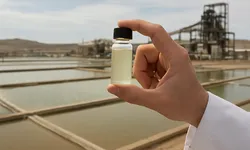
For brine resources, one of the best-known approaches relies on evaporation ponds. Brine is pumped to the surface and left to evaporate over time, concentrating salts until lithium can be processed further. The method is straightforward, but it is slow and land-intensive, and it can be sensitive to local climate conditions. It also raises concerns about water management in arid regions where many brine deposits are found.
Hard-rock mining, often associated with spodumene ore, is a different pathway. It can be faster to ramp once a mine and processing plant are built, but it typically involves energy-intensive crushing, heating, and chemical conversion steps. The trade-offs vary by site, energy mix, and regulatory environment.
These constraints have pushed interest toward DLE methods that aim to extract lithium from brines without waiting for evaporation. The promise is a smaller surface footprint, faster throughput, and potentially better recovery from brines that are not well suited to pond-based concentration.
What "direct lithium extraction" actually means
DLE is not one technology. It is an umbrella term for several approaches that try to selectively capture lithium ions (Li+) from a complex soup of dissolved salts. Brines often contain far more sodium, potassium, magnesium, calcium, and other ions than lithium, and those competing ions can make selective separation difficult.
Common DLE concepts include:
- Adsorption: Solid materials with lithium-selective sites bind lithium ions as brine passes through, then release them during a regeneration step.
- Ion exchange: Resins or inorganic exchangers swap lithium ions for other ions, again followed by a release step.
- Solvent extraction: Chemical agents preferentially pull lithium into an organic phase, separating it from the brine.
- Membranes and electrochemical methods: Electric fields or selective membranes move lithium ions across barriers, sometimes coupled with concentration and purification steps.
Each route has engineering hurdles. Selectivity can drop in real brines. Materials can foul or degrade. Regeneration steps can require chemicals, heat, or electricity. And even after lithium is separated, it still needs to be converted into battery-grade products such as lithium carbonate or lithium hydroxide, which adds more processing.
The Columbia Engineering approach: temperature-sensitive separation
The Columbia Engineering researchers describe a method that uses temperature-sensitive chemistry to capture and release lithium from brines. The key idea is to use temperature as a "switch" that changes how strongly a material or system interacts with lithium ions.
In practical terms, a temperature-triggered process aims to reduce reliance on large volumes of added reagents for regeneration. Instead of using a strong chemical wash to strip lithium from a capture medium, the system can be tuned so that lithium binds under one temperature condition and releases under another. That kind of reversible behavior is attractive because it can simplify operations and potentially lower waste streams.
Temperature is also a control knob that industrial plants already know how to manage. Heat exchangers, thermal loops, and process integration are mature tools. If a lithium extraction process can be driven by modest temperature swings, it could be paired with waste heat from other industrial steps or with renewable thermal sources, depending on the site.
The researchers' claim of speed matters because time is a hidden cost in lithium production. Faster extraction can mean smaller equipment for the same output, less brine sitting in holding systems, and more responsive operations when brine chemistry varies.
Why selectivity is the hard part
Lithium is chemically small and highly hydrated in water, which makes it tricky to separate cleanly. Many brines contain high concentrations of magnesium and calcium, and those ions can compete with lithium in capture materials or clog up membranes. A process that works in a simplified lab solution can struggle when exposed to real brines with organics, silica, and a shifting mix of salts.
A temperature-sensitive mechanism may help by changing binding preferences in a controlled way, but it still has to prove it can maintain performance over many cycles. Industrial extraction is not a one-off experiment; it is continuous operation, often in remote locations, with equipment expected to run for long periods with predictable maintenance.
Another challenge is throughput. Even a highly selective material can be impractical if it captures lithium slowly or requires long contact times. The Columbia team's emphasis on a fast technique suggests they are targeting that bottleneck directly.
Environmental implications: less land, different trade-offs
A cleaner lithium supply chain is not only about carbon emissions. It is also about water use, land disturbance, chemical handling, and the fate of the brine after lithium is removed. Evaporation ponds can occupy large areas and alter local hydrology. Hard-rock mining can generate tailings and requires significant processing energy.
DLE approaches, including temperature-driven ones, are often framed as a way to shrink the surface footprint and shorten the time brine is kept out of its underground reservoir. In many concepts, brine is processed and then reinjected. That can reduce evaporation-related water loss, but it introduces other engineering and monitoring needs, such as managing scaling, maintaining well integrity, and ensuring reinjection does not create unintended impacts.
Chemical use is another lever. If temperature can replace some chemical regeneration steps, that could reduce the volume of reagents transported to and from a site and lower the complexity of waste treatment. But thermal control itself has an energy cost, and the net benefit depends on how that heat is produced and recovered.
The broader point is that "cleaner" is site-specific. A promising lab method still needs a full process design-pumps, filters, heat management, brine handling, and downstream conversion-to understand its real-world footprint.
What it could mean for EV batteries and grid storage
Battery makers care about lithium supply for two reasons: volume and consistency. The industry needs more lithium compounds, and it needs them at predictable purity. Variability in feedstock can ripple through cathode production and cell manufacturing, where tight quality control is the norm.
If faster, more selective brine extraction becomes practical, it could expand the set of brines that are economically usable. Some brines are not ideal for evaporation ponds due to climate or chemistry. DLE methods can, in principle, unlock those resources by separating lithium without waiting for water to evaporate.
That matters for supply diversification. A supply chain that depends on a limited set of extraction methods and regions is more exposed to disruptions. Multiple viable extraction pathways can make the market more resilient, even if no single method becomes dominant.
For grid storage, the story is similar but with a different cadence. Utilities and developers plan projects years ahead, and they want confidence that battery supply will meet delivery schedules. Faster extraction methods could help reduce lead times between resource development and chemical output, though permitting and infrastructure still take time.
From lab breakthrough to industrial plant: the questions that decide everything
New extraction chemistry often looks compelling on paper, then runs into the realities of scale. For a temperature-sensitive lithium extraction method, several practical questions will shape whether it becomes a commercial contender:
- Cycle life: How many capture-and-release cycles can the system run before performance drops?
- Brine tolerance: Does it work across different brine chemistries, including high magnesium or high sulfate content?
- Energy balance: How much heating and cooling is required, and can heat be recovered efficiently?
- Water and chemical inputs: What auxiliary streams are needed for cleaning, regeneration, or product conversion?
- Integration: How easily does it connect to downstream steps that produce lithium carbonate or hydroxide?
There is also the question of economics, which is tightly linked to reliability. A process that is slightly more expensive but highly predictable can win out over a cheaper one that suffers frequent downtime or requires constant tuning.
Academic advances can influence the industry even before full commercialization. They can inspire new materials, new process designs, or hybrid systems that combine temperature control with membranes or electrochemical steps.
A crowded race, with room for better chemistry
Lithium extraction is no longer a niche topic. It sits at the intersection of mining, chemical engineering, and climate policy, and it is attracting attention because it can either accelerate or constrain electrification. The Columbia Engineering method adds another idea to the DLE toolbox: use temperature sensitivity to speed up lithium capture and release from brines.
Whether it becomes a mainstream approach will depend on how it performs outside controlled conditions and how it competes with other DLE technologies that are also chasing speed, selectivity, and lower environmental impact.
For the battery industry, the direction is clear even if the winners are not. The next phase of lithium supply will be shaped as much by process innovation as by geology.