Spectrometers sit quietly behind a lot of modern life. They help identify chemicals, verify materials, and read subtle signatures in light that reveal what something is made of. The catch has always been size and complexity: traditional spectrometers rely on optics, moving parts, and careful alignment, which pushes them into benchtop instruments and specialized labs.
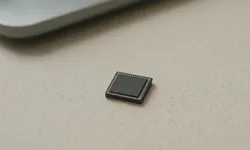
Researchers at UC Davis are pushing that boundary with an AI-powered spectrometer chip designed to deliver spectral analysis in a device small enough to be embedded almost anywhere. The idea is straightforward but ambitious: replace bulky optical assemblies with silicon sensors and let machine learning reconstruct the spectrum from patterns the chip can measure.
If that approach holds up outside the lab, it could change where spectroscopy happens. Instead of shipping samples to centralized facilities, spectral sensing could move into handheld tools, wearables, industrial equipment, and distributed sensor networks.
Why spectrometers have stayed big for so long
A spectrometer's job is to break light into its component wavelengths and measure how much energy appears at each wavelength. That "spectrum" acts like a fingerprint. Different chemicals absorb and emit light in distinctive ways, so spectra can be used to infer composition, concentration, or contamination.
Classic spectrometers often use prisms or diffraction gratings to spread light across a detector array. Many designs also depend on slits, lenses, and precise optical paths. Even when the electronics are compact, the physics of separating wavelengths tends to demand space, stable alignment, and careful calibration.
There are smaller spectrometers on the market, including MEMS-based designs and miniaturized optical modules. But shrinking the optics typically means trading off resolution, sensitivity, or wavelength range, and it can still require packaging that's large compared with typical chips.
The UC Davis approach: sensing first, reconstruction second
The UC Davis work centers on a chip-scale device that uses silicon-based sensors rather than a traditional optical train. Instead of physically dispersing light into a clean spectrum, the chip captures a set of measurements that are related to the incoming light in a more indirect way.
That's where machine learning comes in. A model can be trained to map the sensor's raw outputs to a reconstructed spectrum, effectively learning the inverse of the chip's measurement process. In practical terms, the chip produces a pattern; the AI translates that pattern into spectral information that resembles what a larger instrument would provide.
This is a broader trend in hardware: shift complexity from precision mechanics and optics into computation. The payoff is smaller devices and potentially lower cost, but it also introduces new questions about training, generalization, and long-term stability.
How "AI spectrometry" works in plain terms
To understand the promise and the risk, it helps to separate two parts of the problem: measurement and interpretation. A conventional spectrometer measures the spectrum directly by separating wavelengths. A computational spectrometer measures something else-often a mixture of wavelengths shaped by filters, materials, or sensor responses-and then computes the spectrum.
In a chip-based design, the "something else" might come from multiple photodetectors with different spectral sensitivities, microstructured layers that modulate light, or other on-chip elements that create distinct responses. Each response is like a clue. One clue is not enough, but many clues together can allow reconstruction.
Machine learning can be used as the reconstruction engine. Given training data-examples of known spectra and the chip's corresponding sensor outputs-the model learns a mapping. When the chip sees an unknown sample, the model estimates the spectrum that most likely produced the observed sensor pattern.
This can be powerful, but it also means performance depends on the quality and coverage of training data, the stability of the sensor over time, and how well the model handles conditions that differ from the training environment.
What "grain of sand" scale enables
A spectrometer that approaches the footprint of a tiny chip changes the deployment model. Instead of one expensive instrument shared across a lab, spectroscopy becomes something that can be distributed widely, embedded into devices that already exist, or placed in environments where bulky optics are impractical.
Potential use cases span multiple industries, even if the exact performance envelope will determine what's realistic. Spectral sensing is used in:
- Healthcare and diagnostics, where optical signatures can help analyze samples or monitor biomarkers in controlled settings.
- Food and agriculture, where spectroscopy can detect spoilage, adulteration, or chemical residues.
- Industrial process monitoring, where real-time chemical composition checks can improve quality control.
- Environmental sensing, where distributed devices can track pollutants or changes in water and air chemistry.
- Consumer electronics, where compact sensors can add new context to cameras, wearables, or smart home devices.
Not all of these applications require high-resolution spectra. Many are classification problems-detecting whether something matches a known pattern-where a compact, AI-assisted sensor could be enough.
The technical trade-offs: resolution, range, and reliability
Miniaturization usually forces trade-offs. With computational spectrometers, the key questions become: how much spectral detail can be reconstructed, across what wavelength range, and with what sensitivity? A benchtop instrument can be tuned for narrow peaks, low noise, and stable calibration. A chip-scale device must do more with less.
Another trade-off is robustness. Temperature drift, aging of materials, and manufacturing variation can change sensor responses. In a traditional spectrometer, calibration routines and stable optics help manage this. In an AI-driven design, drift can look like a change in the underlying mapping, which can degrade reconstruction unless the system is designed to compensate.
That doesn't make the approach fragile by default, but it raises the bar for engineering: calibration strategies, self-check routines, and model updates become part of the product, not just the research prototype.
Machine learning brings new questions to measurement devices
When a model is part of the measurement chain, it becomes part of the instrument. That has implications for validation and trust. Users will want to know not only that the chip can produce a spectrum, but that the spectrum is accurate under the conditions they care about.
There's also the issue of "out-of-distribution" inputs. If the chip encounters spectra unlike those in its training set-different lighting conditions, unexpected mixtures, new materials-the model may still output a confident-looking spectrum that is wrong. That's a known failure mode in many ML systems, and it matters more when the output is treated as a physical measurement.
For many deployments, the solution may be to narrow the scope. Instead of promising universal spectroscopy, early products could target specific tasks: detect a particular contaminant, classify a set of known materials, or monitor a defined process where conditions are controlled.
Why silicon integration matters
A chip-based spectrometer isn't just about size. Integration with silicon manufacturing can change cost curves and scalability. If the sensing elements and readout electronics can be produced using established semiconductor processes, it becomes easier to imagine high-volume production and integration into existing devices.
That integration also supports tighter coupling between sensor and compute. On-device processing can reduce the need to stream raw sensor data elsewhere, which helps with latency, power, and privacy. For embedded systems, those constraints often matter as much as raw accuracy.
At the same time, silicon integration doesn't automatically solve optical challenges. Packaging, exposure to the environment, and the interface between the chip and the sample (or incoming light) can dominate real-world performance. The "last millimeter" of sensing is often where prototypes meet reality.
Industry implications: spectroscopy moves from labs to fleets
If spectrometers become cheap and tiny, the market shifts from selling instruments to deploying sensing at scale. That could look like fleets of sensors in factories, distributed monitors in supply chains, or embedded modules in consumer products.
A distributed model also changes how data is used. Instead of occasional measurements, organizations could collect continuous streams of spectral information. That enables trend detection and anomaly alerts, but it also creates data management and governance challenges, especially if measurements are tied to health, food safety, or regulated processes.
For companies that already build sensors, the competitive edge may move toward calibration pipelines, model maintenance, and domain-specific datasets. Hardware becomes the entry point; the long-term value can sit in the software that keeps measurements reliable over time.
What to watch next
The UC Davis chip highlights a direction that many engineers have been aiming for: computational sensing that replaces precision optics with clever measurement design and learning-based reconstruction. The next steps that matter most are practical ones.
- Validation across conditions: performance under different temperatures, lighting environments, and sample types.
- Repeatability and drift: how stable the mapping remains over time and across manufacturing batches.
- Clear application targets: where the chip's resolution and sensitivity are sufficient to outperform existing compact alternatives.
- Calibration and update strategy: how the system maintains accuracy without turning every deployment into a research project.
Spectroscopy has always been a powerful tool, but it has also been geographically and economically constrained by the instruments required. A grain-of-sand-scale spectrometer chip doesn't eliminate the need for high-end lab equipment, but it points to a world where spectral analysis can be embedded into far more places than it is today.