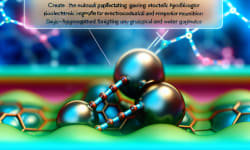
Janus hydrogel bioelectronic interfaces hold immense promise for next-generation electroceutical therapies, but their development has been hindered by complex fabrication processes, limited tunability of asymmetric properties, and weak interlayer bonding. In a groundbreaking study, researchers have engineered a Janus hydrogel featuring dual structural and compositional gradients within a single step, addressing these longstanding challenges.
This innovative hydrogel leverages molecular competition to induce distinct yet robustly bonded layers, each tailored for specific bioelectronic functions. The dual-gradient design enables precise modulation of electrical signals, enhancing the interface's performance and adaptability in biomedical applications. The result is a highly tunable, durable, and multifunctional platform for electrical stimulation therapies, paving the way for more effective and personalized electroceutical treatments.
Key highlights from the research include:
- One-step fabrication of Janus hydrogel with both structural and compositional gradients
- Significantly improved interlayer bonding strength
- Enhanced tunability of asymmetric properties for targeted bioelectronic modulation
- Potential for broad applications in neural interfaces, tissue engineering, and wearable medical devices
References:
Huang, Y. et al. Bioelectronics for electrical stimulation: materials, devices and biomedical applications. Chem. Soc. Rev. 53, 8632–8712 (2024).
Zhao, X. et al. Soft materials for bioelectronic interfaces. Advanced Materials, [details truncated for brevity].


