Data storage is usually discussed in years, not millennia. Hard drives fail, SSDs wear out, and even the most reliable archival media is managed with the expectation that it will be copied forward to something newer.
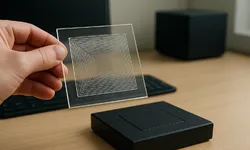
Microsoft has been working on a different premise: store data in glass in a way that could remain readable for thousands of years. The company's long-running research effort uses lasers to write information into glass and optical imaging to read it back, with the aim of creating a medium that can survive conditions that would destroy conventional archives.
The striking part is not only the longevity claim, but the material itself. The glass used can be similar to the kind found in everyday products, including kitchenware-style glass, underscoring that the breakthrough is less about exotic materials and more about how data is encoded and decoded.
Why long-term storage is still a hard problem
Modern computing produces an enormous amount of information that needs to be kept for the long haul: medical records, legal documents, scientific datasets, cultural archives, and the logs that help companies understand what happened years after a system changed. Much of this data is "cold," meaning it is rarely accessed but must remain intact.
Today, the workhorse for cold storage is magnetic tape. Tape remains popular because it is relatively cheap per terabyte and can sit on a shelf without consuming power. But tape is not a "write it and forget it" medium. It requires controlled storage conditions, periodic integrity checks, and migration to new tape generations as formats and hardware evolve.
Hard drives and SSDs are even less suited to multi-decade archiving without active management. Drives have moving parts and lubricants that degrade; SSDs rely on charge stored in cells that can leak over time. Optical discs have their own aging issues, and consumer-grade media varies widely in quality.
The result is that long-term preservation is often a process rather than a product. Organizations plan for refresh cycles, keep multiple copies, and accept that the real cost of archiving includes labor, facilities, and ongoing migration.
Project Silica: storing bits as patterns in glass
Microsoft's glass storage work, often associated with its Project Silica research, takes a different approach. Instead of storing data as magnetic orientation (tape), electrical charge (flash), or surface marks (traditional optical media), the system encodes information as microscopic structures within the glass itself.
The basic idea is to use a laser to create tiny modifications in the material. Those modifications form a three-dimensional pattern that represents data. Reading the data back involves imaging the glass-using cameras and optics-and then interpreting what the system sees to reconstruct the original bits.
This is why the material can be relatively ordinary. The "magic" is in the write and read pipeline: precision laser writing, careful control of how the glass is altered, and robust decoding that can interpret the recorded patterns even if there are small variations.
Because the data is stored inside the glass rather than on a surface coating, it is inherently protected from many of the wear mechanisms that plague other media. Scratches, fingerprints, and surface contamination are less likely to be catastrophic if the information is embedded below the surface.
How lasers and cameras replace tape heads
Traditional storage devices rely on specialized heads that must be positioned with extreme accuracy. Tape drives move media past a head; hard drives float a head nanometers above a spinning platter. These systems are marvels of engineering, but they are also mechanical and sensitive to dust, vibration, and wear.
A glass-based system shifts the challenge from mechanical precision to optical precision and computation. Writing requires focusing laser energy into the glass at specific points and depths. Reading requires capturing images that reveal the internal structures and then using software to decode them.
This camera-based readout is more than a convenience. It suggests a path toward future-proofing: if the data is stored as a physical pattern, a later generation of readers could, in principle, use improved imaging and decoding techniques to recover data even if the original hardware is obsolete.
That does not eliminate the need for standards and documentation, but it changes the failure mode. Instead of being locked to a specific drive model or tape format, the archive becomes something closer to a durable artifact that can be interpreted with the right tools.
The promise of 10,000-year durability-and what it really means
Claims of "10,000-year" storage naturally invite skepticism, and they should. No company can run a 10,000-year field test. Longevity estimates typically come from accelerated aging tests and material science models that extrapolate how a medium behaves under heat, humidity, and other stressors.
The key point is comparative: glass is chemically stable and can tolerate conditions that would quickly degrade magnetic or electronic storage. It does not rely on magnetization that can drift, nor on trapped charge that can leak. It is also resistant to many environmental hazards that complicate long-term storage, including temperature swings and electromagnetic interference.
Even so, "durable media" is only one part of archival survival. An archive also needs readable encoding, error correction, and enough metadata to interpret what the bits mean. A perfectly preserved file is useless if no one can decode the format or understand the context.
Microsoft's approach implicitly acknowledges this by focusing on a read pipeline that uses imaging and software. If the decoding logic can evolve, the archive has a better chance of remaining accessible across centuries of technological change.
Density, access patterns, and where glass fits in the stack
Microsoft has described the technology as high-density, which matters because archival storage is often constrained by physical space and handling. Tape libraries can hold vast amounts of data, but they are still warehouses of cartridges and robotics. A denser medium reduces the footprint and potentially the operational complexity.
But density is only one axis. Another is access. Tape is sequential; retrieving a file can mean loading a cartridge and winding to the right spot. Glass storage, depending on implementation, could also be optimized for archival workloads rather than frequent random access. The use of optical reading suggests a workflow where data is written once and read rarely, possibly in batch operations.
That positions glass as a candidate for the deepest tier of storage-below tape in terms of how often it is accessed, but above "offline" media in terms of reliability and manageability. Think of it as a medium for data that must be kept, must not silently rot, and is unlikely to be needed tomorrow.
For cloud providers, that tier matters. Hyperscale storage is a constant balancing act between cost, durability, energy use, and operational overhead. A medium that can sit for extremely long periods without refresh cycles could change the economics of cold storage, even if the initial write and read hardware is specialized.
Why "kitchenware glass" is a big signal
The mention that the system can work with glass similar to everyday kitchenware is not a gimmick. It hints at supply chain and manufacturability advantages. Exotic materials can be impressive in a lab but difficult to source consistently at scale. Common glass types are produced globally with mature quality control.
If the medium can be made from widely available glass, the bottleneck shifts to the writing and reading equipment and the software stack. That is a familiar pattern in modern storage: the media can be relatively straightforward, while the value concentrates in the system that manages it.
It also suggests resilience. If the medium is not dependent on a rare material, long-term availability becomes more plausible. For archives intended to outlast companies and product lines, that matters as much as raw durability.
Still, "works with" does not automatically mean "ready for mass production." Turning a research prototype into a reliable product requires repeatable manufacturing, predictable error rates, and a service model that fits how customers buy and operate storage.
Industry implications: cloud archives, compliance, and cultural preservation
If glass storage matures, the most immediate impact would likely be in large-scale archival services. Cloud providers already offer multiple storage tiers, and customers routinely trade access speed for lower cost. A glass-based tier could target the segment where durability and minimal maintenance matter more than retrieval time.
Regulated industries are another obvious fit. Many organizations must retain records for long periods and prove integrity. A medium designed to resist degradation could reduce the operational burden of periodic migrations, though it would not eliminate the need for governance, auditing, and redundancy.
There is also a cultural angle. Libraries, museums, and national archives face the challenge of preserving digital artifacts across generations. A stable physical medium that can store large amounts of data could complement existing preservation strategies, especially for collections that are rarely accessed but must remain intact.
The broader storage industry would feel pressure too. Tape vendors have continued to push capacity and longevity, and optical storage has long promised archival benefits. A credible glass-based alternative from a major cloud player could reshape expectations about what "archival" should mean.
What remains uncertain
The hardest questions are practical. How fast can data be written and read? What does the hardware cost look like at scale? How is error correction handled, and how does the system behave after decades of storage under real-world conditions?
There is also the matter of ecosystem. Tape succeeded not only because of the media, but because of standardized formats, a competitive market of suppliers, and decades of operational know-how. Any new archival medium has to prove it can be integrated into existing workflows, from cataloging to retrieval to disaster recovery.
Microsoft's decade-long investment suggests it sees a real need that current media does not fully address. Whether glass becomes a mainstream archival layer or remains a specialized solution will depend on how well it can move from impressive demonstrations to dependable, serviceable infrastructure.