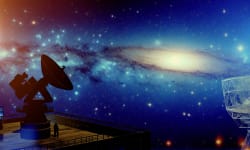
James Webb Space Telescope Unveils First Evidence of Colossal 'Monster Stars' in the Early Universe
Date: Dec 22, 2025
Category: Space & Aerospace
Share on:
You may also like these similar articles

NASA's Mars Helicopter Sets New Record with Colossal Flight Distance
NASA's Ingenuity helicopter achieved a new milestone on its 69th flight on Mars, covering a colossal distance and setting a remarkable record. The feat marks a significant achievement in space...

NASA's X-59 Quesst: A Game-Changer in Supersonic Travel
NASA's X-59 Quesst, developed by Lockheed Martin, is set to revolutionize supersonic travel with its minimal sonic boom. The $247.5 million project will be showcased in a live flight test,...

Japan’s SLIM Mission Aims for Precise Lunar Landing
Japan's SLIM mission, also known as the "Moon sniper," is set to achieve a precise lunar landing with an accuracy of less than 100 meters. The mission is a significant step in Japan's space...
Sierra Space Conducts Tests to Ensure Safety of Inflatable Habitats
Sierra Space is conducting tests to ensure the safety of inflatable habitats, with plans to have them ready for launch in 2026. The company is actively working towards making these habitats a reality...
Astroscale's Mission to Capture Space Junk and Advance Satellite Servicing
Astroscale's ADRAS-J mission is a crucial step towards servicing satellites and clearing space debris, marking a significant leap in space technology. Astroscale aims to catch up to space junk,...

Space Perspective to Conduct Test Flights for High-Altitude Balloon Experience
Space Perspective, a Florida-based startup, is gearing up to offer luxury high-altitude balloon flights, aiming to take thousands of customers up to 100,000 feet. The company is set to conduct test...