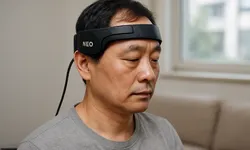
A coin-sized implant that translates brain signals into digital commands is no longer just a lab prototype in China. With commercial medical approval granted to a brain-computer interface (BCI) known as NEO for use in certain paralysis patients, the country has moved a step closer to making thought-controlled devices part of routine clinical care.
The approval is a medical milestone, but it also shifts the conversation. Once BCIs leave tightly supervised trials and enter broader clinical deployment, questions around neural data, cybersecurity, and long-term governance stop being theoretical. They become operational.
NEO's authorization signals momentum in a field that sits at the intersection of neuroscience, implantable electronics, and software. It also highlights a new reality: brain data is becoming a regulated medical asset-and a potential target.
What a brain-computer interface actually does
A BCI is a system that measures neural activity and converts it into commands a computer can interpret. In paralysis, the goal is often to bypass damaged pathways between the brain and muscles. Instead of sending signals down the spinal cord, the user's intent is decoded from brain activity and used to control a cursor, a robotic limb, or other assistive devices.
The core technical challenge is translation. Neurons don't emit "move left" or "click" as discrete messages. They produce patterns of electrical activity that vary across individuals and can drift over time. A BCI must capture those patterns, process them, and then use algorithms to infer intent quickly enough to feel responsive.
Implantable BCIs typically rely on electrodes placed on or in the brain to record activity. Compared with non-invasive approaches (like EEG caps), implants can provide higher-quality signals because they are closer to the source and less affected by the skull and surrounding tissue. That signal advantage is one reason implants are often explored for severe paralysis, where precision and reliability matter.
From research device to commercial medical product
Regulatory approval for commercial medical use changes the nature of a BCI program. It implies a shift from limited research settings to a product lifecycle: manufacturing, clinical workflows, training, maintenance, and post-market monitoring.
For patients, commercialization can mean more predictable access pathways. Instead of relying on enrollment in a study, eligible patients may be able to receive the device through clinical channels, subject to medical criteria and availability.
For hospitals and clinicians, it introduces practical questions. Who implants the device and who supports it afterward? How are calibration and software updates handled? What happens when a patient's decoding performance changes over months or years? These are not abstract engineering problems; they shape outcomes and safety.
For the broader industry, commercial approval is a signal that regulators are prepared to evaluate BCIs as medical devices rather than experimental curiosities. That can accelerate investment and competition, but it also raises the bar for evidence, quality control, and security practices.
How a coin-sized implant can enable thought-controlled devices
A compact implant suggests a design optimized for implantation and daily use. In general terms, an implantable BCI system includes:
- Electrodes that pick up neural signals.
- Onboard electronics that amplify and digitize those signals.
- Software that decodes patterns into commands.
- An external interface that connects the decoded output to a computer, wheelchair, communication aid, or other device.
Even when the implant is small, the system around it can be complex. Signal processing must filter noise and isolate relevant activity. Decoding models often require training sessions where the user attempts specific actions while the system learns the associated neural patterns.
Latency matters. If the system responds too slowly, it becomes frustrating or unusable. Reliability matters even more. A BCI that works well one day and poorly the next can undermine trust and limit real-world utility.
Commercial deployment tends to force hard choices about robustness: fewer fragile components, clearer clinical procedures, and software that can handle variation without constant expert tuning.
The new privacy frontier: neural data
BCIs generate data that is both medical and deeply personal. Neural recordings can reveal patterns associated with movement intention, attention, fatigue, and other internal states. Even if a system is designed only to decode motor intent, the raw signals may contain more information than the product ultimately uses.
That creates a central question: what counts as necessary data? In many digital health systems, data minimization is a guiding principle-collect what you need, keep it only as long as required, and protect it throughout. With BCIs, the temptation to store more data can be strong because more data can improve algorithms, support troubleshooting, and enable future features.
Commercial medical use also introduces more stakeholders. Data may pass through hospital systems, device vendors, and support teams. Each handoff increases the need for clear governance: who can access what, under which conditions, and with what audit trails.
The privacy debate is not just about whether neural data is "sensitive." It is about whether existing medical privacy frameworks are ready for a category of data that can be continuously generated, high-dimensional, and potentially repurposed.
Cybersecurity risks move from hypothetical to clinical
Any connected medical device faces cybersecurity risk. BCIs add urgency because they sit close to the nervous system and may be used for essential functions like communication or mobility.
The threat model is broader than dramatic scenarios. Practical risks include:
- Data interception if signals or decoded outputs are transmitted insecurely.
- Unauthorized access to device settings, calibration parameters, or logs.
- Malicious or flawed updates that degrade performance or introduce vulnerabilities.
- Ransomware-style disruption affecting clinical support systems that patients depend on.
Even without an internet connection, devices can be exposed through maintenance ports, paired accessories, or hospital networks. Security therefore becomes a full lifecycle requirement: secure design, secure manufacturing, secure deployment, and secure servicing.
For BCIs, there is also a human-factor dimension. If a patient relies on the system to communicate, any downtime is more than an inconvenience. Resilience and recovery procedures become part of patient safety.
Clinical realities: surgery, support, and long-term performance
Implantable BCIs are not like consumer wearables. They involve surgery, follow-up care, and ongoing technical support. That means the success of a commercial BCI depends on more than decoding accuracy in controlled demonstrations.
Long-term performance can be affected by biological responses around electrodes, changes in neural signals, and the day-to-day variability of human physiology. Systems may need periodic recalibration. Patients may need training to achieve reliable control, and clinicians need protocols to evaluate progress and troubleshoot issues.
There is also the question of device lifespan. Implantable electronics must manage power, heat, and durability. If components fail, replacement may require additional procedures. Commercial deployment forces manufacturers and regulators to confront these realities with clearer expectations for monitoring and reporting.
For paralysis patients, the promise is substantial: more independence, faster communication, and new ways to interact with the world. But the clinical pathway must be sustainable, not just technically impressive.
Why China's approval matters for the global BCI race
BCIs have become a strategic technology area, blending medical innovation with advanced electronics and AI-driven signal decoding. A commercial medical approval in China suggests that domestic developers and regulators are aligning to move beyond pilot studies.
That can influence the global landscape in several ways. It may encourage other regulators to clarify their own pathways for BCI approvals. It may intensify competition among companies building implants, decoding software, and assistive device ecosystems. It may also accelerate standards discussions around safety testing, interoperability, and security requirements.
At the same time, BCIs are not a winner-take-all market. Clinical adoption depends on local healthcare systems, reimbursement structures, surgical capacity, and long-term support. Different regions may prioritize different use cases, from communication aids to rehabilitation tools.
NEO's approval adds another data point: BCIs are moving from speculative to deployable, and countries that can operationalize the full stack-device, software, clinical workflow, and governance-will shape how the technology is used.
Governance questions that don't have easy answers
Commercial BCIs raise governance issues that sit between medical ethics and digital policy. Consent is one. Patients may consent to implantation for a specific function, but what about future software updates that change capabilities? What about secondary use of data for algorithm improvement?
Accountability is another. If a BCI-controlled device behaves unexpectedly, is it a clinical issue, a software bug, a sensor problem, or user fatigue? Medical device regulation has frameworks for adverse events, but BCIs blur lines between human intent and machine interpretation.
Then there is the question of boundaries. A medical BCI for paralysis is a therapeutic tool. But the same underlying technology could be adapted for broader applications. Clear rules about permitted uses, data handling, and security baselines can help keep medical deployments focused and trustworthy.
NEO's approval brings these issues forward because it implies real patients, real clinics, and real operational systems-not just prototypes.
What to watch next
The next phase for any newly approved BCI will be defined by execution. Observers will be watching for how the technology performs outside controlled environments, how clinicians integrate it into care, and how manufacturers handle updates and support.
Equally important will be the guardrails: privacy protections for neural data, security practices that match the sensitivity of the device, and transparent processes for monitoring safety over time.
BCIs promise a new interface for people whose bodies can't reliably carry out their intentions. With commercial medical approval in China, that promise is closer to everyday reality-and the responsibilities that come with it are now harder to ignore.